Repairs · Hamilton
Garage Door Safety Inspection
It has been a hard winter. The bottom seal froze to the slab twice, the opener groaned each morning, and one afternoon you noticed a cable on the left side hanging with a little slack in it.
Garage Door Safety Inspection
In plain words
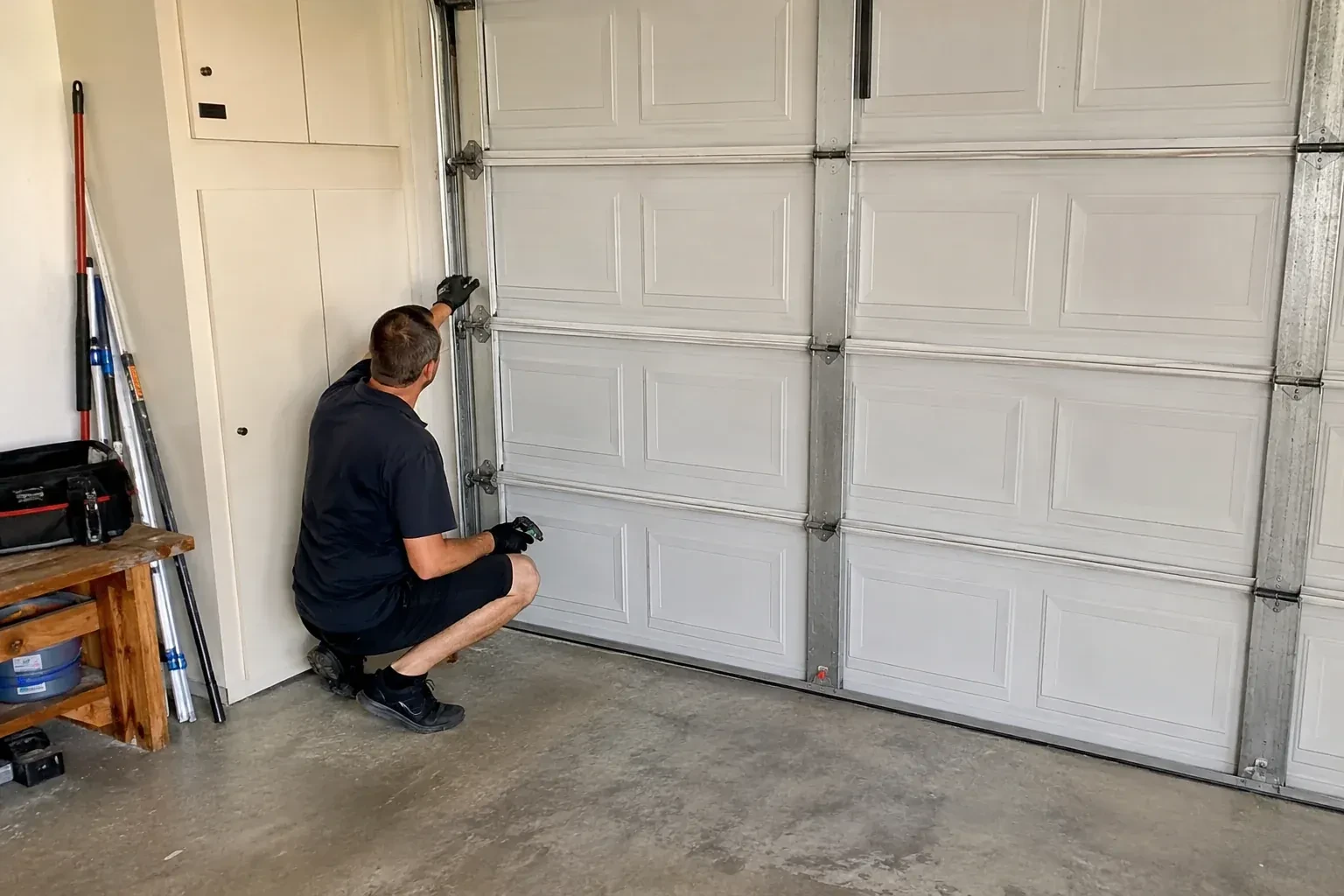
An inspection separates looking from fixing on purpose. Springs, cables, drums and bottom brackets hold the door's weight as stored tension, so the technician examines them closely, measures what can be measured and photographs what matters, without loosening or winding anything. Once the findings are written down, any adjustment or repair becomes its own planned job, done with the door secured and the stored spring tension controlled by whichever method that system calls for. This order protects the hardware as much as the people around it, and it means the report describes the door as it actually is rather than as it was left after a hurried tweak.
How the visit goesDuring the power outage you pulled the red cord and tried to lift the door by hand. It felt like lifting a piano, and when you let go part-way it sank back toward the floor on its own.
Hamilton
How the visit goes
Putting a name to the door and the opener
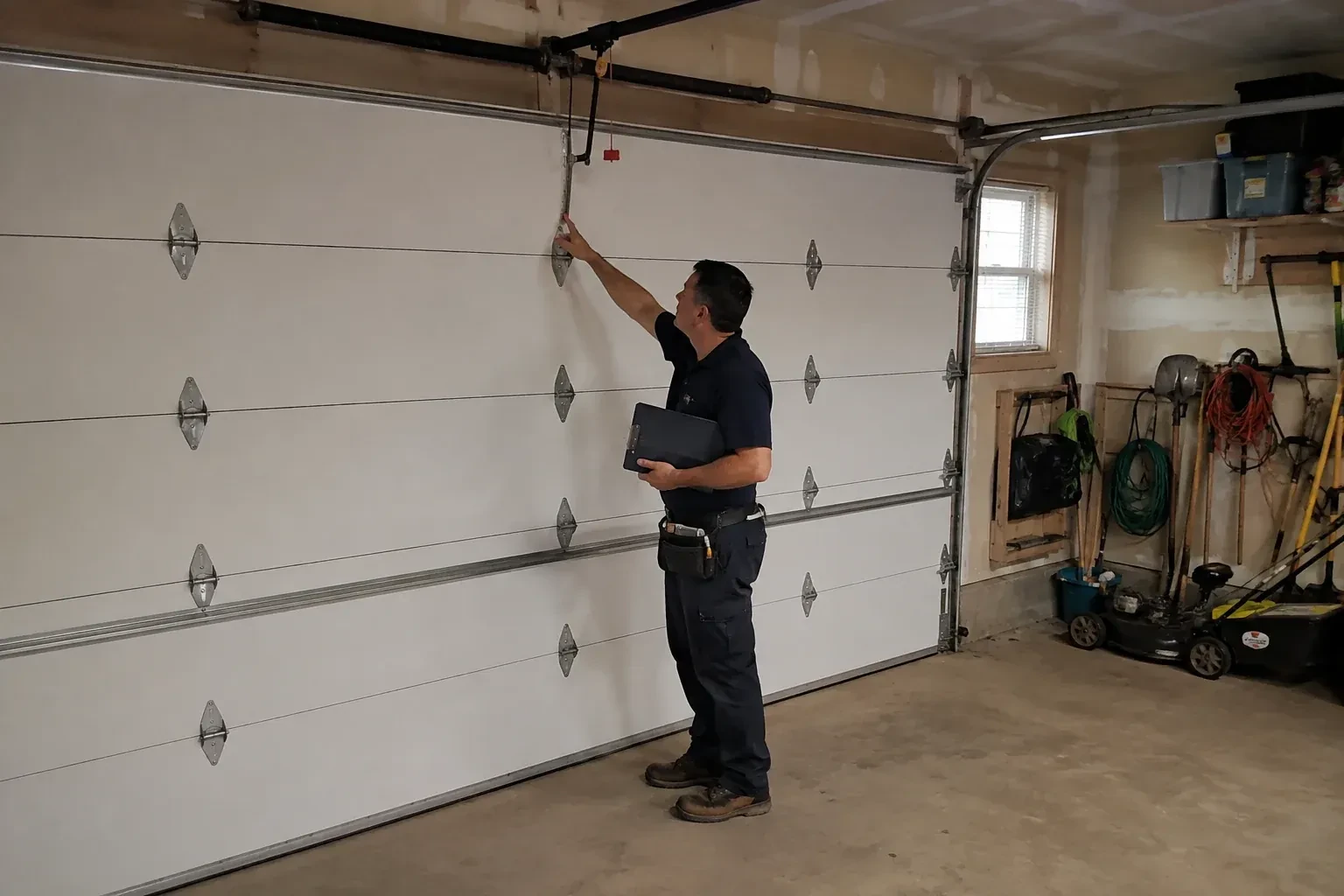
The first thing the technician does is read labels. The door's model tag is usually on the inside of an end stile or the bottom section, and the opener's is on the motor head; between them they tell the technician the door's weight class, the lift hardware it was built with and the exact test procedure the opener maker publishes. That matters because reversal settings, photo-eye mounting heights and force limits differ between models and generations. Writing the model numbers down at the start also means the report is tied to a specific door, so the next person to look at it, years from now, starts from the same page.
Controls, release and lock
Each way of operating the door is tried in turn: the wall control, every remote the household uses, the keypad if there is one, and the lock or vacation button that disables the remotes. The technician checks that the wall control is mounted out of a small child's reach and within sight of the door, that batteries are fresh, and that the manual release cord hangs within reach with its handle intact and releases and re-engages the trolley cleanly. Any manual slide lock on the door is checked to make sure it is disengaged, since a door locked by hand while the opener is connected is a common cause of a bent rail.
A baseline for the next inspection
The most useful thing about a first inspection is the second one. With the model numbers, spring dimensions, cable condition, seal gaps and photo-eye heights on record, the next technician can measure the same points and tell you what has moved rather than starting from nothing. For most households an annual visit fits, with a look in early spring after the salt season a natural choice. A door that carries a lot of traffic, an older door, or one in a rental where nobody watches it closely may suit a check each season. Whatever the interval, the report you are holding is the reference the next one will be read against.
Garage Door Safety Inspection
In the van
- Camera for findings
- Silicone garage-door lubricant
- Inspection checklist and report form
- Lens cloth and cleaner
- Tape measure and level
What affects the quote
Same fees day, night or weekend
1Findings that change the scope on the day
If a stop-use item turns up, securing the door and explaining the correction takes extra time on the visit. That, and any work you approve, is quoted separately before it starts.
2Single or double door
A double door is wider and heavier and commonly adds centre hinges and reinforcement a single door does not carry, with a heavier counterbalance to test, so it takes longer to walk and to write up; section count itself follows the door's height rather than its width.
3Maintenance done during the visit
Lubrication, photo-eye cleaning and alignment, fastener tightening and fresh batteries can be added on the spot. Each is a small line on the quote, chosen by you at the door.
Garage Door Safety Inspection: questions
What exactly gets looked at during the inspection?
The whole system, not just the opener. Sections, hinges, rollers, tracks and their fasteners; springs, cables, drums and bottom brackets; the bottom seal and perimeter weatherstrip; the opener head, rail, arm and mounting; the photo eyes, contact reversal, wall control, remotes, keypad and manual release; and the warning labels. Each is examined, and the door is tested both by hand and under power.
What are photo eyes, and how are they tested?
They are the two small sensors low on each side of the opening, one sending a beam and the other receiving it. The technician confirms both indicator lights hold steady, that the units sit at the height the opener maker specifies, and that the lenses are clean and the wiring secure. Then a close cycle is started and something is passed through the beam; the door should reverse. Misalignment or a grimy lens is corrected on the spot.
Will the springs be adjusted while you are there?
No, and that is deliberate. An inspection reads the counterbalance: the technician checks the coil, measures wire size and length, and watches how the door behaves by hand. If it is out of step with the door's weight, the report says so and by how much. Winding a spring is its own appointment, done once the door is clamped and the system is calm, which keeps the inspection record honest about the door as found.
Repair & Maintenance
- Off-Track Garage Door ResetA delivery van backed into the shop's overhead door this afternoon.
- Garage Door Panel ReplacementA stray ball went through one of the window panes in the top section.
- Garage Door Bottom Seal ReplacementOne end of the bottom seal has slipped out of its channel and hangs down like a loose shoelace.
Garage Door Safety Inspection near you
In Hamilton we work on garage doors of every age and size: single and double residential doors, insulated and uninsulated, wood and steel, plus commercial rolling and sectional doors. The service pages explain the repairs, replacements and installations that apply to each.