Springs · Hamilton
Garage Door Balance Adjustment
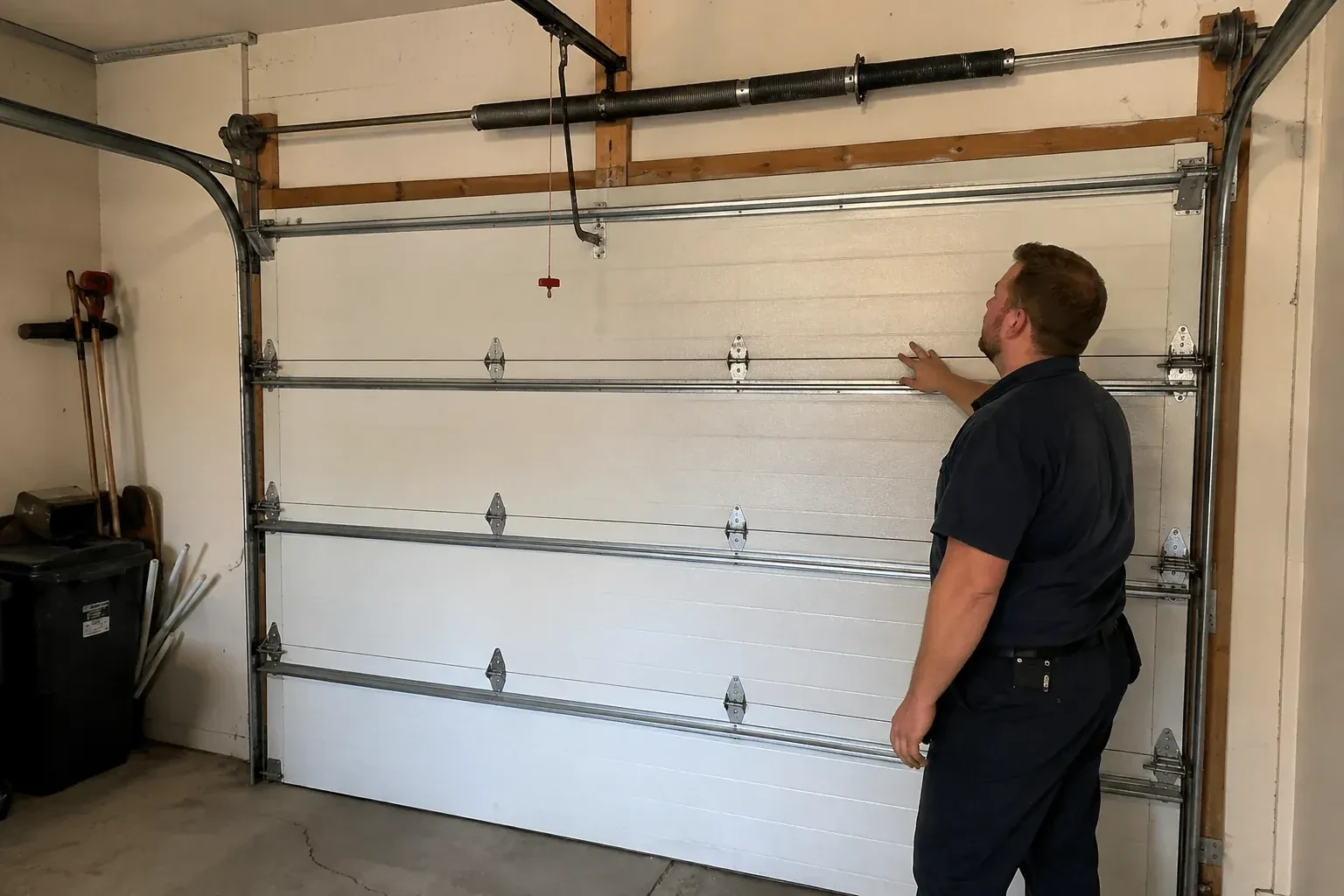
With the door closed, daylight shows under one bottom corner and the seal is squashed flat at the other. As it rises, the left side leads by an inch or two, and the top section twists slightly as it turns into the horizontal track.
Garage Door Balance Adjustment
In plain words
Balance changes for ordinary reasons. Springs are rated for a certain number of cycles and lose a little tension as they age. A new bottom seal, insulated panels, a window section or a decorative overlay adds weight the original springs were never sized for. Rollers stiffen, hinges wear, and in a cold snap the whole system feels heavier for a few weeks. Any of these tips the door from weightless to a chore. A balance adjustment starts by identifying which of them is at work, then resets the springs to suit the door as it is today, and corrects the friction so the adjustment holds.
How the visit goesThe opener has started to groan on the way up. The door climbs slowly, hesitates near the top, and on the way down it sometimes stops a hand's width above the floor and reverses, as if something were in the way when nothing is.
Hamilton
How the visit goes
Friction along the path
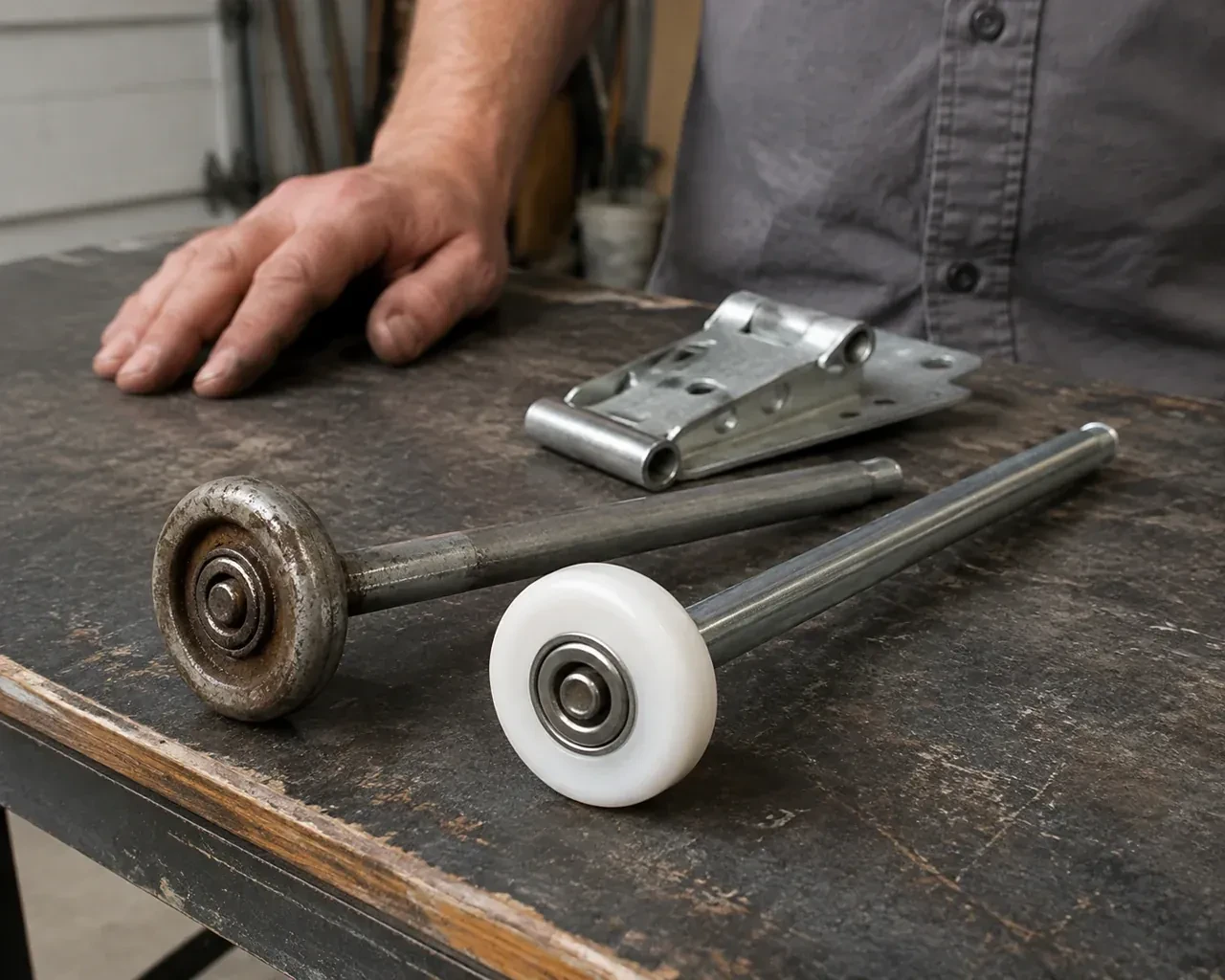
Some doors that feel heavy are not short of spring tension at all; they are dragging. The technician runs a hand and an eye along the vertical and horizontal tracks for dents, misaligned joints and brackets that have pulled away from the jamb, spins each roller to find seized bearings or cracked wheels, and flexes each hinge for play or splits. Dry, worn rollers alone can add real effort to every lift. Binding at one point in the travel, rather than heaviness everywhere, is the signature of a friction problem, and correcting it first means the springs are then adjusted to the door's true weight rather than to the drag.
Adjusting extension springs at the hook
On an extension system the door is opened fully and clamped so each spring hangs slack, and the tension is changed by moving the S-hook or the cable clip to a different hole in the track hanger, or by shortening the cable at the clip. A hole further back stretches the spring more when the door closes and adds lift; a hole further forward reduces it. Both sides are moved the same amount so the door stays level, and the pulleys and containment cables are checked as the hooks are reset. The clamps come off and the door is tested by hand at several heights, then adjusted again if needed.
Watching for the early signs of drift
You will now know what the door feels like when it is right, which makes small changes easy to spot. A door that begins to close with a heavier thud, an opener that pauses at the top or hums a little longer, a gap appearing under one corner, or a door that no longer quite stays fully open when released are all early signs. Cold weather can make the door feel a little heavier for a few weeks without anything being wrong. But a door that stalls, races or no longer passes its balance check is telling you to stop using it and book an inspection promptly rather than waiting out the season, since the cause is not always minor.
Garage Door Balance Adjustment
In the van
- Nylon or steel rollers
- Garage-door lubricant
- Replacement hinges
- Extension springs and S-hooks
- Containment cables
What affects the quote
Same fees day, night or weekend
1Access to the spring shaft
Shelving, bikes or storage close to the header, a very high ceiling or a tight low-headroom installation slow the work. Clearing the area beforehand helps the time quoted.
2Opener adjustment and tests
Resetting travel limits and force settings on the opener and running the reversal tests is a short step that follows every balance job and is named in the quote when needed.
3Extension-spring containment and pulleys
On an extension door, a missing containment cable is added and worn pulleys are replaced with the adjustment. Each is a small parts line on the quote.
Garage Door Balance Adjustment: questions
Why does my door sink or slam down when released?
Not enough spring tension for the door's weight. Springs lose a little pull as they age through thousands of cycles, and a door gains weight when insulation, windows or a heavier seal are added. Either way the door outweighs its springs. Adding tension in measured quarter turns restores the hold, provided the springs are sound; if they are near the end of their life, new ones are the right answer.
Should I lubricate anything after the visit?
A little, twice a year. Use a product sold for garage doors on the spring coils, hinge pins, roller stems, bearings and bracket pins, and cycle the door a few times to work it in. The tracks want a wipe, not a spray, because a slick track lets the rollers skid and gathers grit. Skip thick grease. Low friction is what lets the springs' setting hold true.
My door has become noisy. Is that related to balance?
Often, yes. A door that has grown heavy makes the opener labour, the chain or belt slap, and the rollers and hinges complain under load they were never meant to carry. Balancing the door takes that load back onto the springs, and the lubrication and roller checks that come with the visit quiet the rest. A door that runs silently is usually a door that runs light.
Springs & Hardware
Garage Door Balance Adjustment near you
In Hamilton we work on garage doors of every age and size: single and double residential doors, insulated and uninsulated, wood and steel, plus commercial rolling and sectional doors. The service pages explain the repairs, replacements and installations that apply to each.