Openers · Hamilton
Garage Door Remote and Keypad Programming
The new car has three buttons in the mirror for garage doors. You held the old remote up to it as the manual said, the light in the car changed, and yet the door ignores it completely.
Garage Door Remote and Keypad Programming
In plain words
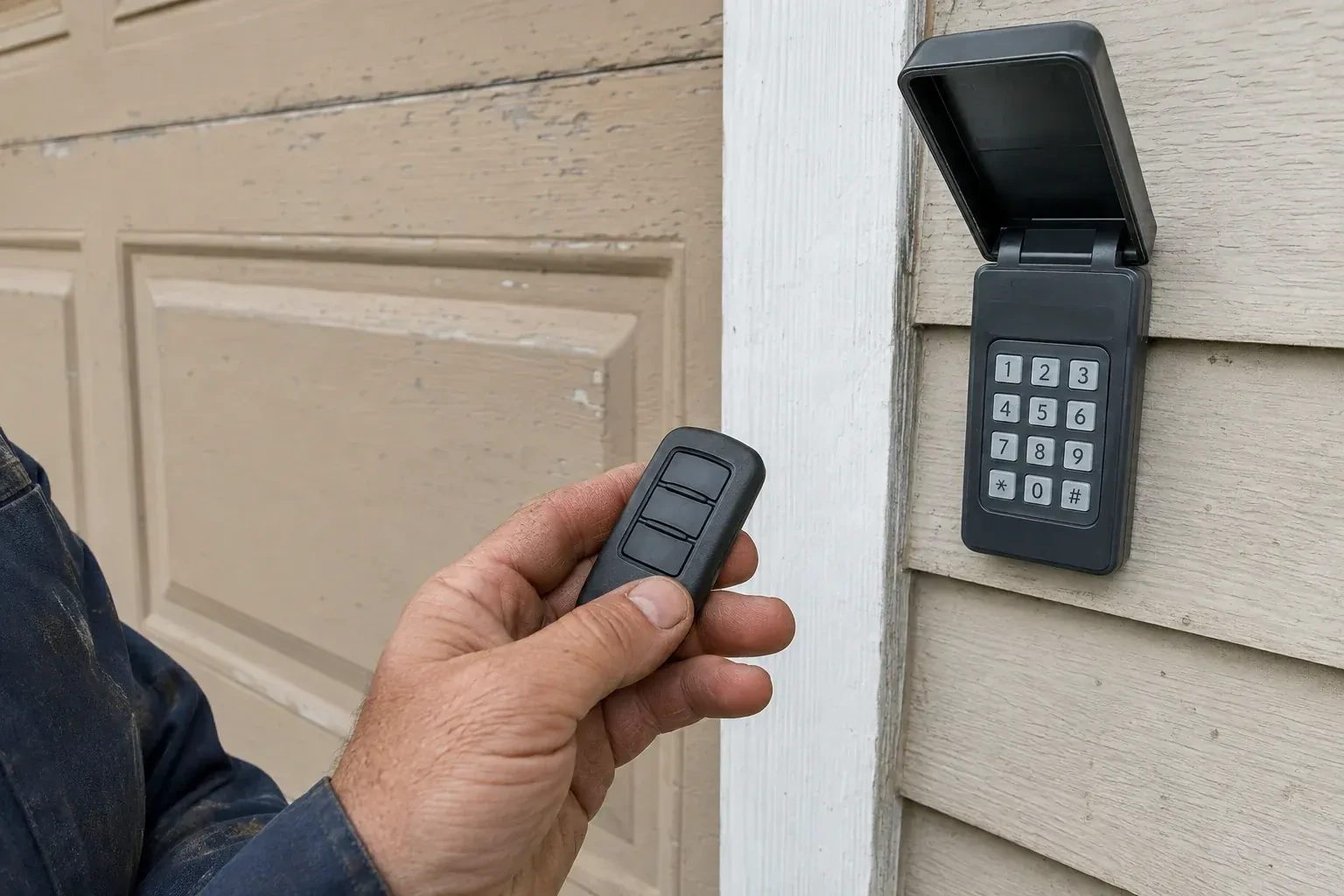
An outdoor wireless keypad lets the household in without a remote, and programming it properly is more than typing a code. The technician pairs it to the opener, sets a personal code you choose, and on many models adds temporary codes that expire after a set number of hours or openings, handy for a cleaner or a delivery. The keypad is programmed before it is screwed to the wall, fitted with fresh batteries suited to a cold climate, and mounted where a child cannot reach it and the door is in view. Codes stay private; they are not written on the paperwork.
How the visit goesThe remote opens the door only when you are almost underneath it. From the end of the driveway you press five or six times and nothing happens. It started around the time the bulbs in the opener were changed to LEDs.
Hamilton
How the visit goes
Is the opener itself ready?
Programming only takes when the opener is in a state to accept it, so the first minutes are spent on the unit rather than the remote. The technician confirms the head unit has power and responds to the wall control, checks that the lock indicator is not blinking, and looks at the photo-eye lights near the floor to see the beam is aligned. The door is run through a cycle to be sure it travels and reverses properly. If the wall button moves the door and the remotes do not, the fault is on the wireless side and programming is likely to help; if nothing moves the door, the visit becomes a repair first.
Adding a remote to the memory
With a compatible remote in hand and the opener confirmed ready, pairing is a short exchange. The technician presses and releases the head unit's learn button, which opens a programming window of roughly half a minute, then presses the chosen remote button until the opener light blinks or the unit gives a click. That button now opens the door. A second button can be tied to a second door or a gate the same way. Each remote is tested from the driveway and from beside the door, and the process is repeated for every device on the list so nobody is left with a control that half works.
Codes kept private, visitors kept temporary
Your keypad code is yours alone. It is not written on the invoice or left in the garage, and it is chosen to be something other than the house number or a birth year. On keypads that support them, you have learned to set a temporary code for a cleaner, a trade or a house-sitter that stops opening the door after a set number of hours or uses, and you know how to change the main code yourself from the instructions. If a code is ever shared too widely, changing it is a two-minute job rather than a service call.
Garage Door Remote and Keypad Programming
In the van
- In-vehicle compatibility bridge module
- Receiver transformer and two-conductor wire
- Multi-door keypad
- Add-on rolling-code receiver kit
- CR2032 and CR2016 coin cells
What affects the quote
Same fees day, night or weekend
1Range and interference work
Swapping bulbs, freeing the antenna and re-testing range from the street is a small addition when remotes work only up close.
2Opener check-up before programming
Confirming power, lock mode, sensors and door travel is included; any repair those checks reveal is discussed and quoted before it is done.
3Add-on receiver for an older opener
Converting a fixed-code opener means a receiver kit, wiring to the wall-button terminals and new remotes, quoted as an upgrade rather than a programming call.
Garage Door Remote and Keypad Programming: questions
What should I gather before the technician arrives?
Every remote you own, working or not, and the keypad if it has been taken down. The opener's model label or a photo of the learn button under the light cover. The cars whose buttons need training, parked close to the door. A note of who should have access and whether any remote is missing. A code in mind for the keypad. All of this shortens the visit and makes the handover complete.
How long do I have after pressing the learn button?
Roughly half a minute on most openers. Press and release the button, then press the remote button you want to use until the opener light blinks or the unit clicks. If the window closes before you finish, simply press the learn button again and repeat. The window is short on purpose, so a passing signal cannot slip into the memory.
How many remotes can one opener store?
It depends on the unit. Older head units and add-on receivers hold a handful of devices, often fewer than ten, while newer openers store dozens of remotes, keypad codes and vehicle buttons. When a memory is full, the oldest entry may be overwritten or the new device refused. Taking stock of which controls are still in use, and clearing the ones that are not, keeps space for the devices that matter.
Openers & Access
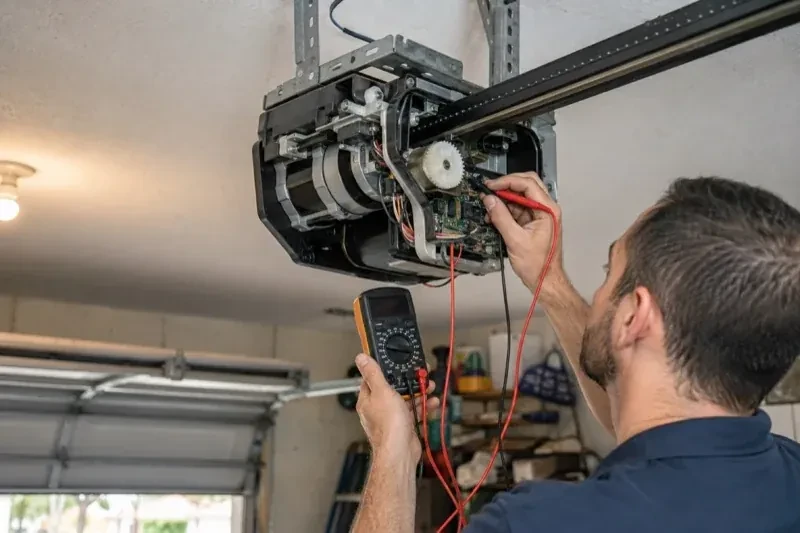
- Chain-Drive Opener RepairThe motor runs, you can hear it working, but the door never moves.
- Belt-Drive Opener RepairHalfway up, every single time, the door hesitates and there is a ratcheting sound from the motor…
- Garage Door Opener ReplacementPress the button and the motor hums, but the door stays exactly where it is.
Garage Door Remote and Keypad Programming near you
In Hamilton we work on garage doors of every age and size: single and double residential doors, insulated and uninsulated, wood and steel, plus commercial rolling and sectional doors. The service pages explain the repairs, replacements and installations that apply to each.