Springs · Hamilton
Garage Door Cable Replacement
The car bumper kissed the door on the way in. The bottom panel has a dent, the bracket in that corner sits crooked, and the cable on that side has jumped and gone slack, so the door reverses every time it tries to close.
Garage Door Cable Replacement
In plain words
A cable visit runs in a set order. First the opener is disconnected and the door clamped so nothing can move. Then the counterbalance is unloaded so the drums, cables and bottom brackets can be handled calmly. The old cables come off, the drums and brackets are inspected, and new cables of the correct specification go on. Both sides are tensioned evenly until the door sits level, then the springs are wound back to the turns the door height calls for. Finally the door is balanced by hand, the opener reconnected and its travel and reversing checked. You are shown the finished door working before the technician leaves.
How the visit goesThe cable has wrapped itself around the shaft above the door instead of sitting on its drum. When the opener runs, the door lurches, one side rises before the other, and the top panel twists.
Hamilton
How the visit goes
Springs and balance behind the cable
Cables only carry what the springs give them, so the springs are checked next. On a torsion system the technician looks for a gap in the coil that means a break, measures the wire and length to confirm the spring suits the door weight, and notes whether both springs on a double door match. On an extension door each spring is checked for stretch, a broken end or a missing containment cable through the middle. A weak or mismatched spring leaves one cable slack and the door heavy on one side, and if that is the story behind the cable, the spring work is explained and quoted alongside rather than left to surface later.
Fitting cables that match the door
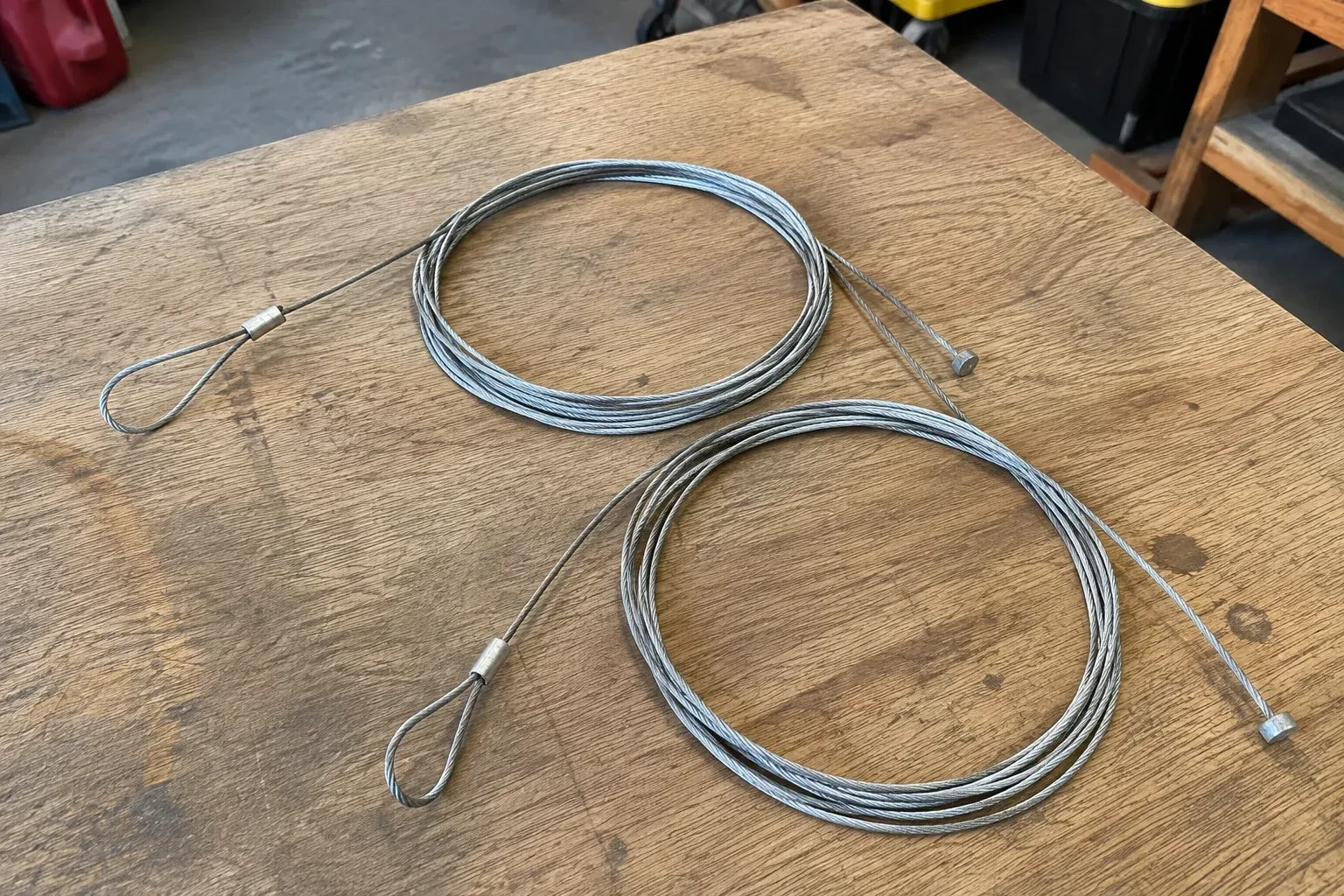
The replacement cables are chosen for construction, diameter and length rather than taken from a general bin. Residential doors use galvanized aircraft-type wire rope, and the length depends on the door height, the drum profile and the lift type; a high-lift door or a double door has its own requirements. The swaged stop on the new cable is seated in the drum slot and the cable is wrapped in the groove in the correct direction, leaving the drum on the side that leads straight down to the bracket. At the bottom, the loop goes over the bracket pin and is secured. The other side is fitted the same way.
Cables and springs on the same clock
Cables and springs age together, and your new cables now have a head start on the springs that remain. If the springs were assessed and left in place, you have a rough idea of the cycles they have left, and the sensible plan is to have them changed as a pair before they break, at which point the cables are checked again and simply re-tensioned. A door that starts to feel heavy, a spring that has gone quiet and then begins to creak, or a gap appearing in the coil are the signs to act on. Handled this way, the counterbalance is renewed in planned visits rather than on a difficult morning.
Garage Door Cable Replacement
In the van
- Containment cables
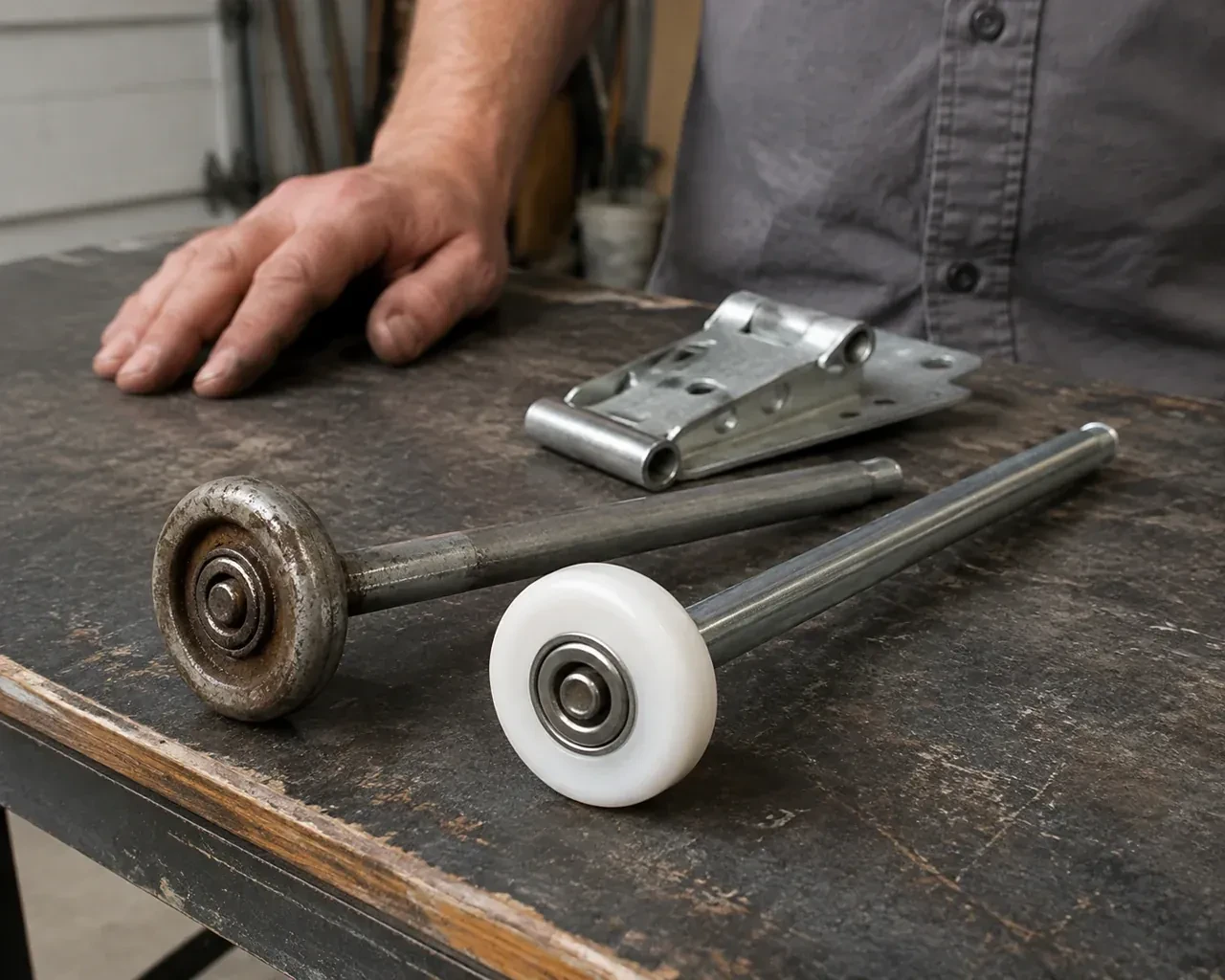
- Bottom rollers and hinges
- Bottom brackets with cable pin
- Clevis pins and cotter pins
- Drum set screws
What affects the quote
Same fees day, night or weekend
1Impact damage to track or sections
A bumper strike often bends the track, a hinge or the bottom section as well as displacing the cable. Straightening or replacing those parts is quoted as separate work.
2Opener adjustment afterwards
A newly balanced door often needs the opener's travel limits and force settings reset and its reversing tested. That short adjustment is named in the quote when it is needed.
3Door height and lift type
Cable length follows the door height and whether the hardware is standard lift, low headroom or high lift. Taller doors and high-lift conversions take longer cables and specific drums.
Garage Door Cable Replacement: questions
Why do cables rust faster than the rest of the door hardware?
Because of where they live. The bottom loop of each cable sits at floor level in the corner of the garage, exactly where slush and road salt drip off the car and pool through the winter. Salt water works into the strands and rusts the cable from inside, so it looks thin and brown near the bracket while the upper run still looks new. Keeping that corner clear and lightly lubricated slows it considerably.
Should I keep using the opener until the technician arrives?
It is better to leave the door where it is and use another way in and out. Running the opener against a crooked or cable-slack door tends to tangle the cable further, twist the top section and knock the door out of its track, which adds to the repair. Pull nothing and adjust nothing; simply keep the opening clear and let the technician take it from there.
What is the difference between a lift cable and a safety cable?
A lift cable does the work: it connects the door's bottom corner to the spring system and carries the door's weight. A safety or containment cable does no lifting at all. It runs through the middle of an extension spring and is anchored at both ends so that if the spring breaks, the pieces stay put. Torsion springs sit on a shaft and do not need one.
Springs & Hardware
Garage Door Cable Replacement near you
In Hamilton we work on garage doors of every age and size: single and double residential doors, insulated and uninsulated, wood and steel, plus commercial rolling and sectional doors. The service pages explain the repairs, replacements and installations that apply to each.