Springs · Troy
Garage Door Balance Adjustment in Troy
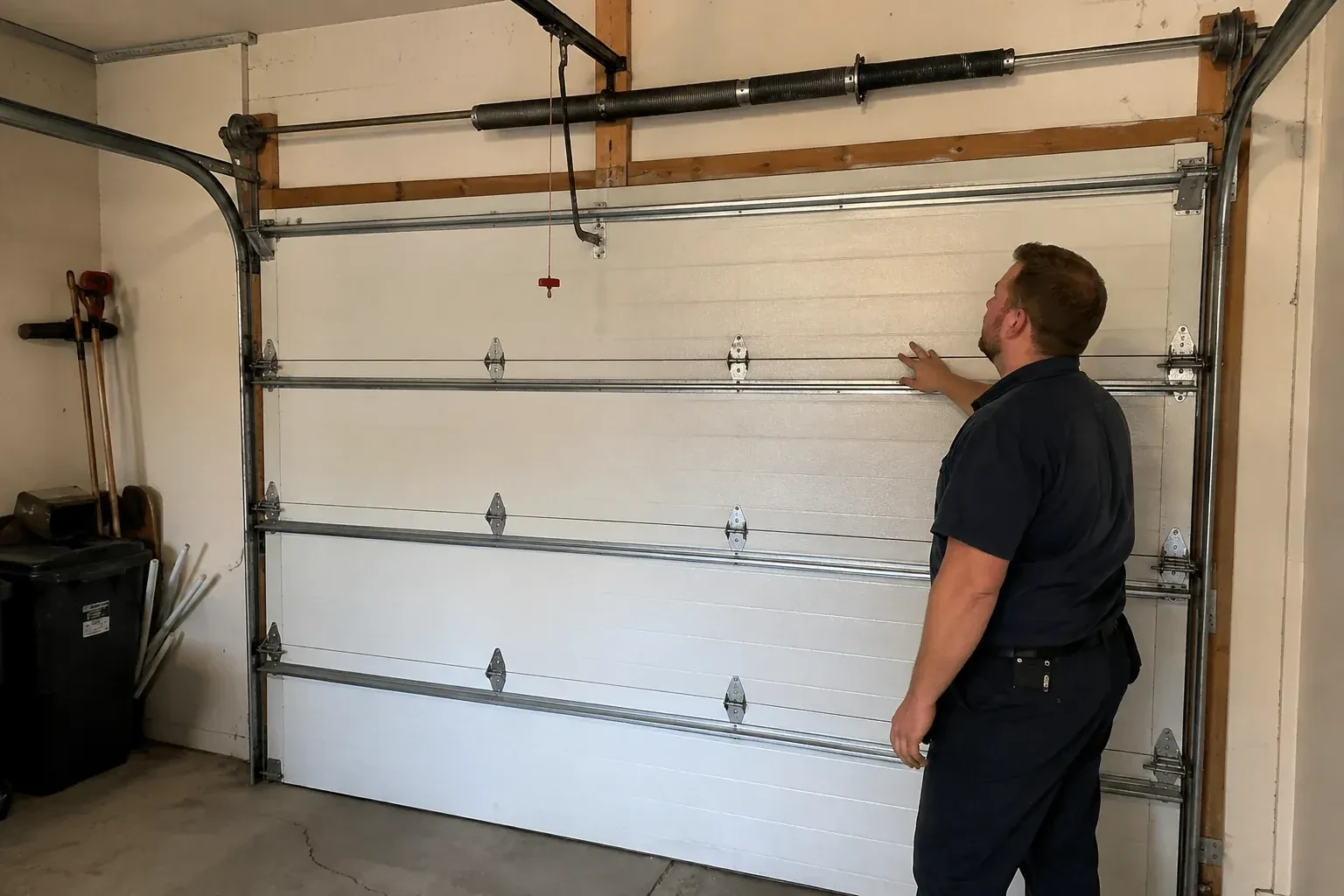
With the door closed, daylight shows under one bottom corner and the seal is squashed flat at the other. As it rises, the left side leads by an inch or two, and the top section twists slightly as it turns into the horizontal track.
Garage Door Balance Adjustment
In plain words
Balance changes for ordinary reasons. Springs are rated for a certain number of cycles and lose a little tension as they age. A new bottom seal, insulated panels, a window section or a decorative overlay adds weight the original springs were never sized for. Rollers stiffen, hinges wear, and in a cold snap the whole system feels heavier for a few weeks. Any of these tips the door from weightless to a chore. A balance adjustment starts by identifying which of them is at work, then resets the springs to suit the door as it is today, and corrects the friction so the adjustment holds.
How the visit goesSomeone replaced the springs a while back and the door has bounced at the top ever since. It slams open against the stops, then creeps down a few inches, and the opener trolley rattles because the door is pushing where it should be resting.
Troy
How the visit goes
Looking at the opener's settings without touching them yet
The opener is inspected as a witness rather than a cure. The technician checks its force and travel settings, listens for strain during a powered cycle, and notes whether it reverses near the floor or stalls part way up. A force setting that has been turned up over the years is a strong hint that someone has been compensating for a door that grew heavy. Those settings are left alone for now, because the right order is to balance the door first and then fit the opener to it. Any change made to the opener before the door is corrected would only mask what the door is asking for.
Proving the result with the safety tests
The visit is finished only when the standard tests pass. The technician places a piece of two-by-four flat on the floor in the door's path and closes it with the wall button; the door must strike the wood and return to fully open. Then, with the door closing again, an object is passed through the photo-eye beam, and the door must reverse. Finally the door is released once more and the hand test repeated so you can see it hold at knee height, at waist height and fully open. These are the same checks the door industry's own maintenance checklist uses, and you are welcome to watch each one.
What the springs still have left
Part of the visit's value is knowing where the springs stand. If they were adjusted and left in place, you will have been told roughly how much life they appear to have and what signs mark their end: a door that grows heavy again within a season, a coil gap, or rust flaking from the wire. If they were replaced, the door starts a new cycle count and the note by the opener says when they went in. Either way, you can plan the next spring work on your own schedule rather than on the morning the car needs to leave and the door refuses to lift.
Garage Door Balance Adjustment
In the van
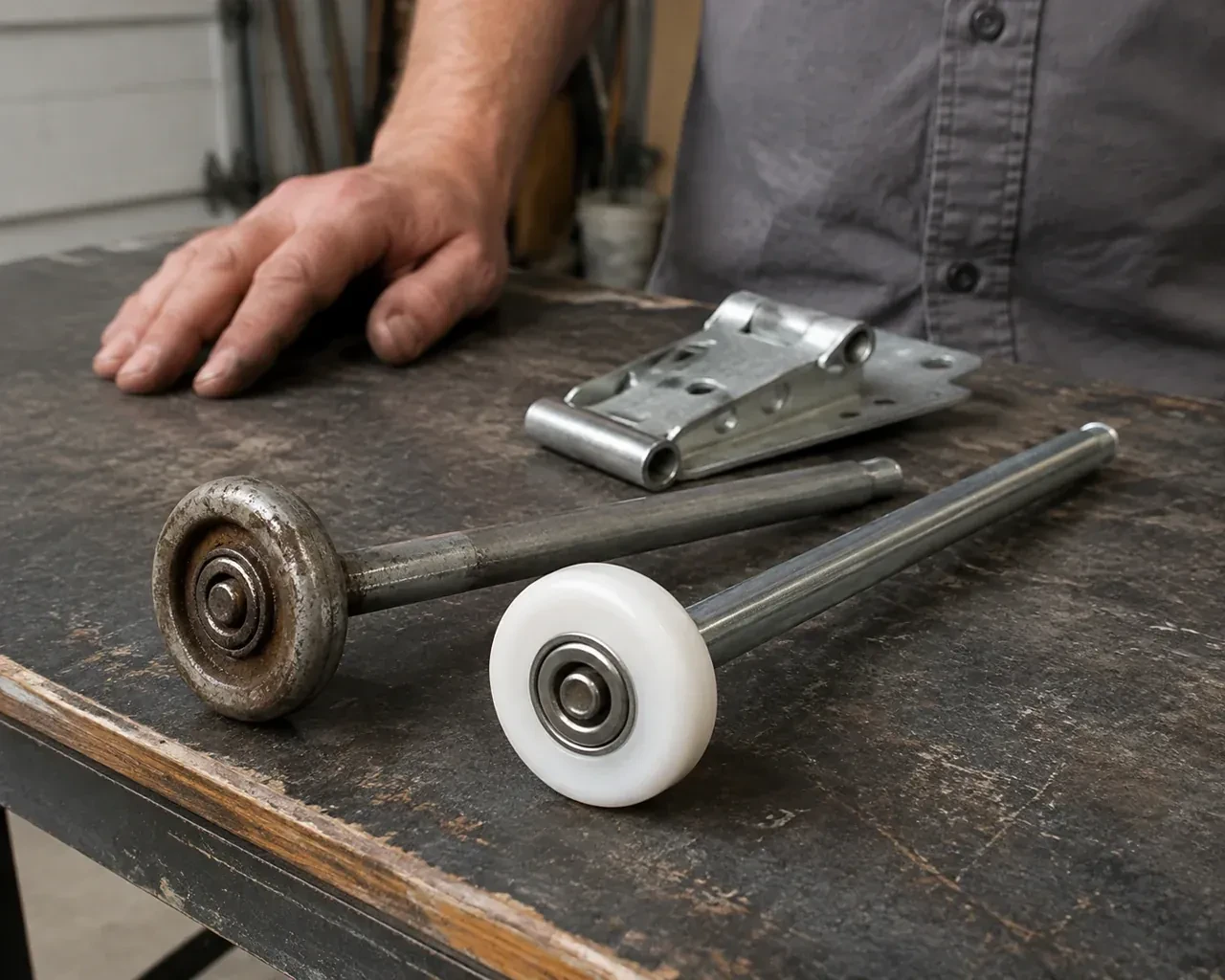
- Nylon or steel rollers
- Garage-door lubricant
- Replacement hinges
- Extension springs and S-hooks
- Containment cables
What affects the quote
Same fees day, night or weekend
1Access to the spring shaft
Shelving, bikes or storage close to the header, a very high ceiling or a tight low-headroom installation slow the work. Clearing the area beforehand helps the time quoted.
2Door out of level
A door with one corner high needs its cables reset on the drums before the tension is set, which adds a step to the visit and is listed as its own item.
3Lubrication and tune-up
Some people combine the balance adjustment with a full lubrication and hardware tightening. That bundle is priced as a whole and saves a separate maintenance visit.
Garage Door Balance Adjustment: questions
Why does my door sink or slam down when released?
Not enough spring tension for the door's weight. Springs lose a little pull as they age through thousands of cycles, and a door gains weight when insulation, windows or a heavier seal are added. Either way the door outweighs its springs. Adding tension in measured quarter turns restores the hold, provided the springs are sound; if they are near the end of their life, new ones are the right answer.
Should I lubricate anything after the visit?
A little, twice a year. Use a product sold for garage doors on the spring coils, hinge pins, roller stems, bearings and bracket pins, and cycle the door a few times to work it in. The tracks want a wipe, not a spray, because a slick track lets the rollers skid and gathers grit. Skip thick grease. Low friction is what lets the springs' setting hold true.
My door has become noisy. Is that related to balance?
Often, yes. A door that has grown heavy makes the opener labour, the chain or belt slap, and the rollers and hinges complain under load they were never meant to carry. Balancing the door takes that load back onto the springs, and the lubrication and roller checks that come with the visit quiet the rest. A door that runs silently is usually a door that runs light.
Springs & Hardware
Garage Door Balance Adjustment near you
For homes and businesses in Troy we handle the full run of garage door work: broken springs and cables, doors that have left the track, openers and remotes that stopped answering, worn rollers and seals, tune-ups, and new doors chosen and installed to suit the building.