Grand River Door & Opener Co.
Issue 1 of 3Garage DoorsHamilton, Ontario
Commercial Sectional Door Repair: what the visit covers
Impact repair is more than flattening a dented panel.
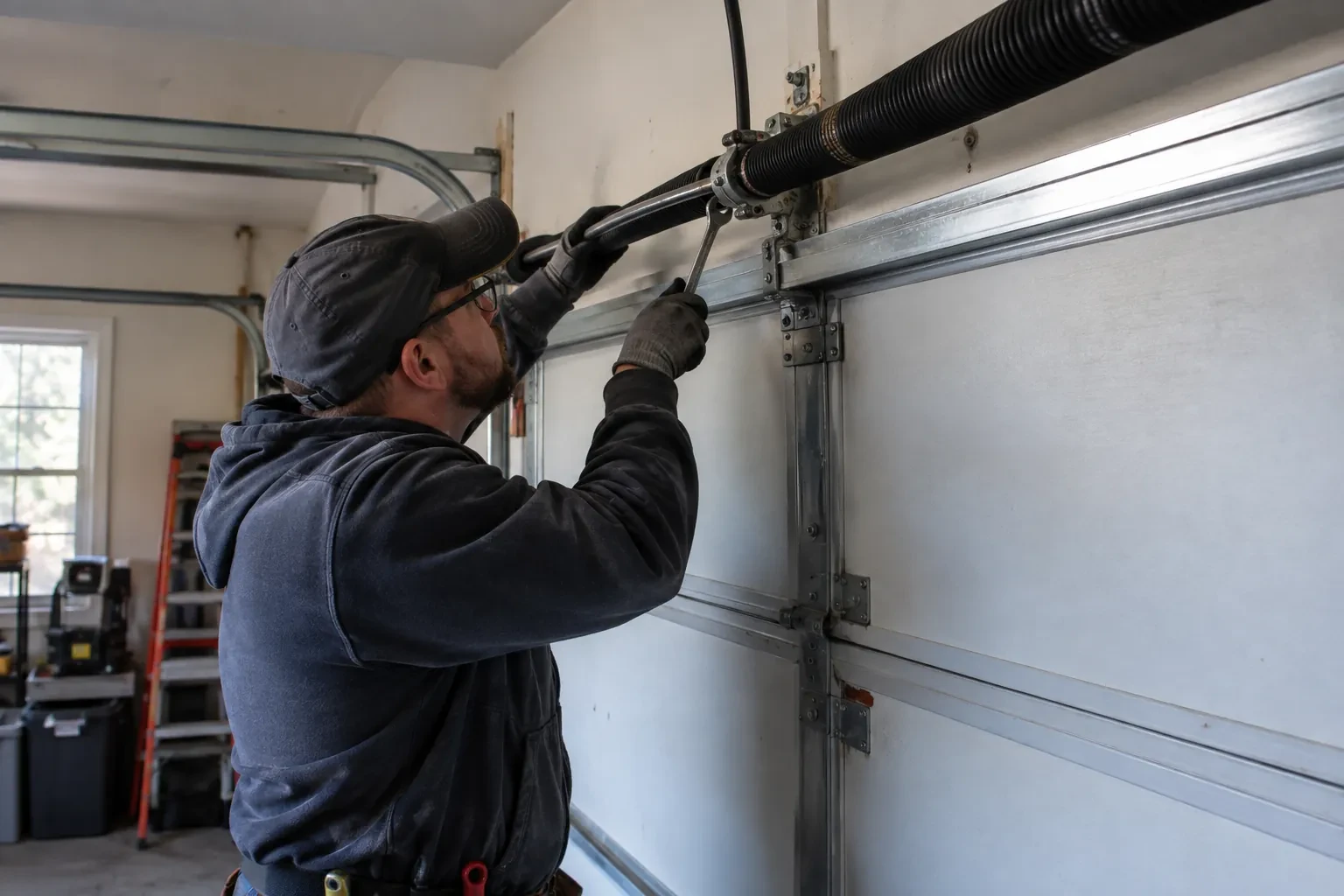
Impact repair is more than flattening a dented panel. The damaged section may have transferred force into an end stile, hinge, roller carrier, vertical track or jamb attachment. The repair therefore follows the load path from the contact point into the supporting hardware. A replacement section or reinforcement is matched to the door construction, track spacing is restored, and every affected connection is tightened or renewed. Final cycling confirms that the repaired door follows the curve cleanly and seats evenly at the opening.
Reviewing high-lift geometry
High-lift and vertical-lift systems are identified before components are ordered. The technician records door dimensions, track rise, drum arrangement, shaft location, cable path, spring information and operator connection. Back hangs, sway braces, track splices and end stops are examined because movement overhead can appear as cable trouble below. Cable tension is observed at key transitions, especially near the open position. The resulting measurements guide part selection and show whether the fault came from wear, lost support, changed adjustment or a mismatch within the lift arrangement.
Controlling the door before repair
Work begins by separating the bay from normal traffic and placing the door in the safest workable position for the identified fault. Electrical controls are isolated where the task calls for it, and the assembly is held with clamps, locking pliers or rated supports suited to its weight and track type. Stored spring force is managed with proper winding tools and a planned sequence. With movement controlled, hardware can be removed without letting a crooked section, slack cable or broken spring shift the rest of the system.
A clear opening and shared operating habits
Repair restores the equipment, while everyday habits help preserve it. Marked stand-off areas give vehicles room to clear the bottom section and vertical tracks. Loads are staged beyond the door path, control stations remain visible, and staff wait for the opening to reach its operating position before passing through. The threshold is kept free of packaging, ice and debris. When everyone knows which sound, movement or sensor indication to report, small changes are documented clearly and the door can be assessed with useful evidence rather than a vague description.