Repairs · Hamilton
Off-Track Garage Door Reset in Hamilton
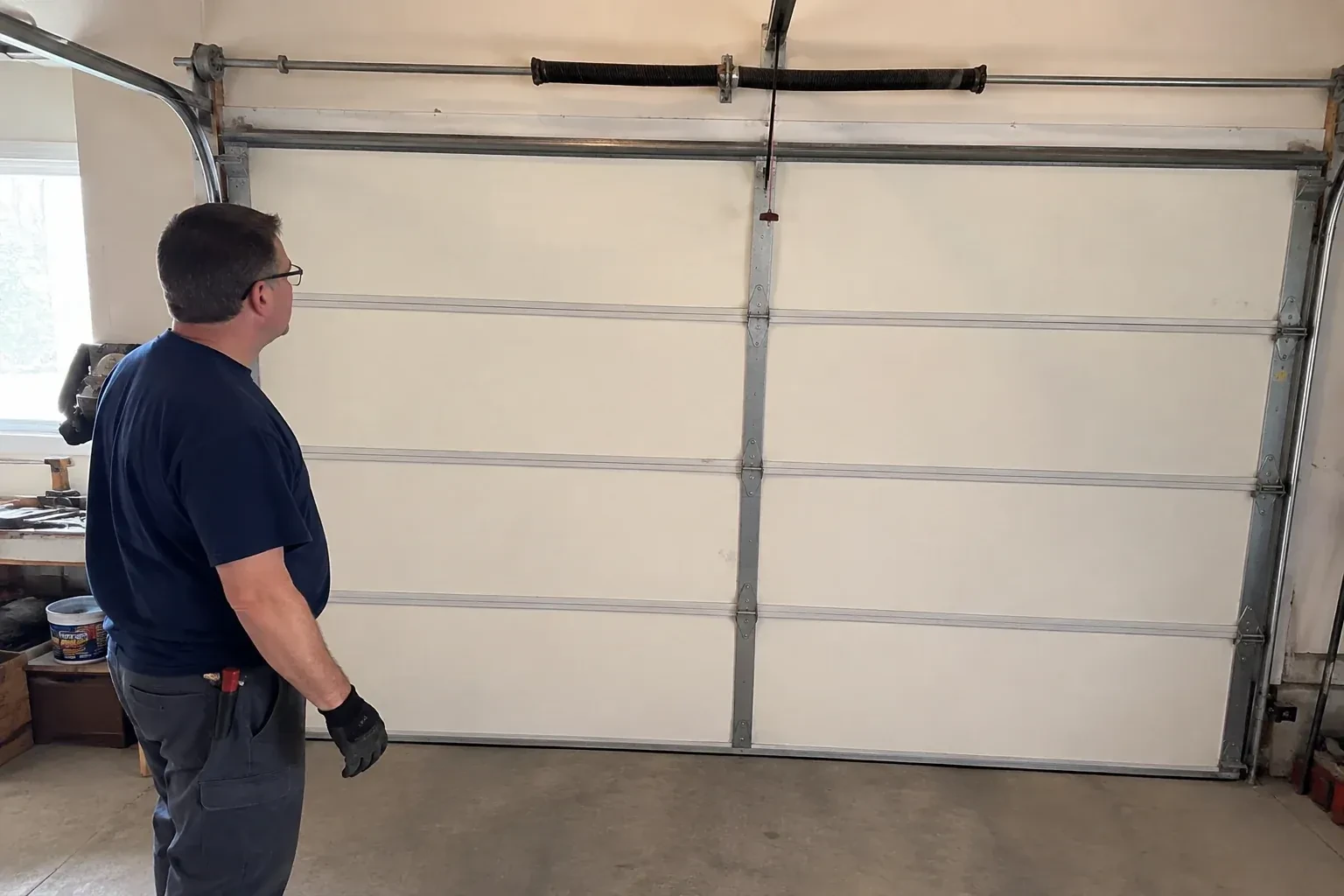
A delivery van backed into the shop's overhead door this afternoon. The lower panel is pushed in, the track on that side is kinked, and the door is hanging unevenly with staff unable to close up for the night.
Off-Track Garage Door Reset
In plain words
Older doors and workshop doors tend to come off their tracks for reasons of wear rather than impact. Steel rollers lose their bearings and grind down to the stem, wood jambs dry out and let lag screws spin, back hangs loosen and the horizontal track drifts out of level. A reset on a door like this is partly restoration: worn rollers are replaced as a set, fasteners are moved into sound wood or through-bolted, the horizontal tracks are re-hung square to each other, and hinges that have bent from years of misalignment are swapped. The door comes back quieter and straighter than it has run in years.
How the visit goesThere was a loud bang from the garage, then silence. The door is jammed a third of the way open, wedged at an angle in the tracks, and the opener light is blinking while the trolley slides uselessly along the rail.
Hamilton
How the visit goes
What happened in the minutes before
A short conversation fills in the picture. Did a vehicle touch the door? Was there a bang, a squeal or a grinding noise? Had the door been frozen to the floor that morning, or had something been left under it? Was one side already hanging lower for a while? Had the rollers been noisy for months? Each answer points at a different cause: impact, cable failure, ice, obstruction or long wear. Photographs the homeowner took from a safe distance are useful too, because they show the door before anything moved. This history is the difference between resetting the symptom and fixing the reason.
Running the door by hand
Before the opener comes back into the picture the door is proven manually. The clamps come off, the technician lifts the door slowly from the bottom, watching each roller pass through the curve and along the horizontal rail, and listening for any scrape that would mean a tight spot. At the halfway point the door is let go and should hold there with little drift. It is raised fully and must stay up. Then it is lowered and must close level along the floor. Any drag, sway or roller lift at this stage is fixed now, because the opener would only hide it until the next event.
Room around the door, inside and out
Most impact-related off-track calls come from small nudges rather than collisions. Parking with the bumper a little further from the door, keeping bicycles, bins and hockey gear out of the door's path and never leaning long objects against the sections inside all remove the common triggers. Anything stored on the floor near the opening should sit clear of the space the door sweeps through and clear of the photo eyes. If the garage is tight, a simple stop on the floor or a hanging marker for the windscreen gives the driver a fixed reference and takes guesswork out of parking in the dark.
Off-Track Garage Door Reset
In the van
- Locking pliers and track clamps
- Torsion spring winding bars
- Long lag screws or through-bolts
- Jamb and flag brackets
- Level and plumb line
What affects the quote
Same fees day, night or weekend
1Hinges, brackets and fixtures bent in the event
A twisted bottom bracket, a bent graduated hinge or a distorted top fixture is replaced rather than straightened. Each one is a small part but is priced and listed on its own so you see what was changed.
2Opener reconnection and adjustment
Reconnecting the trolley, resetting travel limits and force, and testing the reversal are normally part of the reset. An opener arm, bracket or reinforcement damaged during the event is an additional item.
3Whether the cables are involved
A cable that simply jumped its drum is rewound; one that is frayed or broken is replaced along with its partner, and the springs are unwound and rewound to do it. Each step is listed separately.
Off-Track Garage Door Reset: questions
What is the red cord hanging from the opener, and should I pull it?
That is the manual release, which disconnects the door from the opener's trolley so the door can be moved by hand. It is safe to pull when the door is fully closed, and it is the right thing to do if the opener keeps trying to move a jammed door. Avoid pulling it with the door part way open unless a technician asks you to, because an unbalanced door can move once it is freed.
Can a door frozen to the floor really cause this?
Yes, and in winter it is one of the most common causes. Meltwater under the bottom seal refreezes overnight and bonds the door to the slab. The opener pulls, the door stays put, the cables go slack and unwind off their drums, and when the ice lets go the door lurches up unevenly. Freeing the seal by hand before using the opener on icy mornings prevents almost all of these calls.
Can I keep using the opener until someone comes?
It is better to leave the opener alone. A racked door does not become straighter with another cycle; every press of the button forces the crooked sections deeper into the rails and strains the hinges and wall brackets. Unplug the opener or pull the red release cord if the door is fully closed, keep people and vehicles clear, and let the technician move it in a controlled way.
Repair & Maintenance
- Garage Door Tune-UpTwice this week the door started closing, stopped a metre from the floor and reopened on its own.
- Garage Door Panel ReplacementA stray ball went through one of the window panes in the top section.
- Garage Door Bottom Seal ReplacementOne end of the bottom seal has slipped out of its channel and hangs down like a loose shoelace.
Off-Track Garage Door Reset near you
In Hamilton we work on garage doors of every age and size: single and double residential doors, insulated and uninsulated, wood and steel, plus commercial rolling and sectional doors. The service pages explain the repairs, replacements and installations that apply to each.